
bitcoin breaks — mastering BTC breakouts and breakdowns for traders
Table of Contents
1. Overview: why "bitcoin breaks" matter 2. What "bitcoin breaks" actually means 3. Types of bitcoin breaks: breakouts vs breakdowns 4. Technical indicators to confirm bitcoin breaks 5. Fundamental catalysts that trigger BTC breaks 6. Market psychology, liquidity, and false breaks 7. Trading strategies for bitcoin breaks 8. Risk management and position sizing for BTC breaks 9. Historical examples of meaningful bitcoin breaks 10. Tools, resources, and a practical trading checklistOverview: why "bitcoin breaks" matter
Access a secure and efficient USDT purchase option at https://changehero.io/buy/usdt, designed for reliability, simple navigation, and clear fee structures for all users.
When markets move decisively through important price levels, those events are called breaks — and for bitcoin, breaks can define trends, trigger intense volatility, and create trading opportunities. "Bitcoin breaks" is shorthand for price breaking support or resistance, signaling potential momentum in a new direction. Traders, investors, and analysts watch these breaks because BTC has a strong tendency to trend once key levels are breached: the move that follows can be prolonged or violently reversed depending on context.
What "bitcoin breaks" actually means
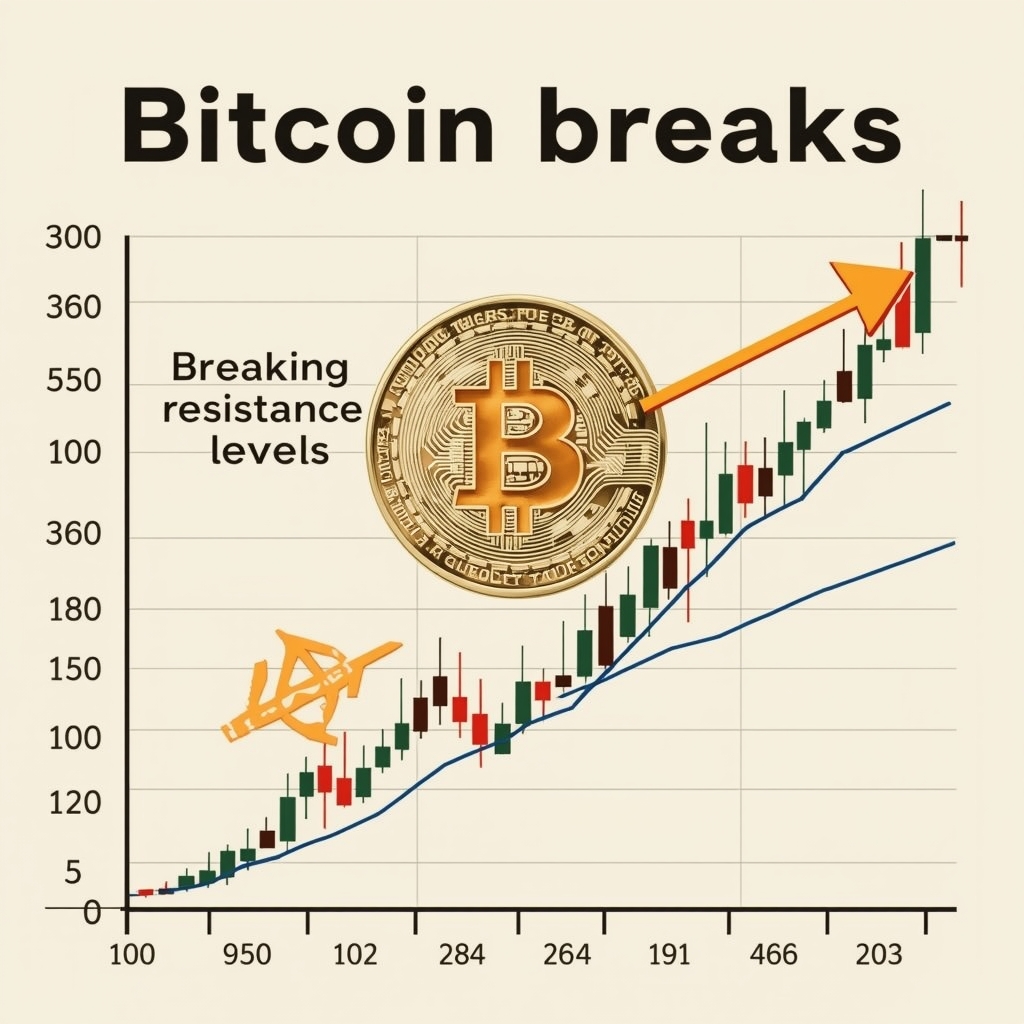
At its simplest, a bitcoin break occurs when BTC price moves beyond a defined technical level — a horizontal support/resistance, a trendline, a chart pattern boundary, or an indicator-derived line (moving average, Bollinger Band, etc.). The significance of the break depends on timeframe, volume, and whether the move closes beyond the level or merely wicks through it. Traders distinguish between intraday probes and validated closes; a close beyond resistance on higher volume is more convincing than a fleeting spike.
Types of bitcoin breaks: breakouts vs breakdowns
Breaks come in two main flavors: breakouts (bullish breaks above resistance) and breakdowns (bearish breaks below support). Each carries distinct implications for momentum, liquidity flows, and trade planning.
| Feature | Breakout (bullish) | Breakdown (bearish) |
|---|---|---|
| Direction | Upward | Downward |
| Typical catalysts | Positive news, rising adoption, short squeezes | Regulatory fear, macro shock, large sell orders |
| Volume expectation | Higher volume confirms move | Higher volume confirms move |
| Common false signal | Fakeout (reversal below resistance) | Bear trap (recovery above support) |
Technical indicators to confirm bitcoin breaks
Successful traders use multiple confirmations to reduce false signals. Key tools include:
- Volume: a faithful companion — genuine bitcoin breaks often come with expanding volume on the breakout/breakdown candle.
- Moving averages: price crossing and holding above/below significant MAs (50, 100, 200) helps identify sustained trend changes.
- Relative Strength Index (RSI): divergence or an RSI breakout can support the directional bias.
- On-Balance Volume (OBV): tracks buying/selling pressure to validate the trend behind the break.
- Price patterns: measured moves from triangles, flags, and ranges estimate targets.
Combining timeframes is also crucial: a break on the daily chart carries more weight than one on the 5-minute chart. Watch for retests — after a break, price often returns to retest the broken level; a successful retest that holds is a strong confirmation.
Fundamental catalysts that trigger BTC breaks
Technical setups set the stage, but fundamental events often act as the match. Common catalysts for bitcoin breaks include macroeconomic releases, regulatory announcements, major exchange listings or delistings, institutional flows (ETF approvals, custody deals), and large miners selling or accumulating. Understanding the context helps differentiate a noise-induced spike from a structural break.
For instance, an unexpected rate cut rumor or a sudden regulatory clampdown can flip a bullish breakout into a rapid breakdown if sentiment changes mid-move. Combining news monitoring with technical confirmation reduces the chance of being caught by surprise.
Market psychology, liquidity, and false breaks
Psychology rules many bitcoin breaks. Market participants cluster around round numbers and prior highs/lows; when price nears such levels, liquidity thins or concentrates, enabling manipulative moves or "stop hunts" that produce false breaks. Recognize patterns like bear traps and bull traps — intentionally triggered by large players to capture liquidity before reversing the move.
False breaks typically share characteristics: low follow-through volume, quick reversals, and lack of confirmation on higher timeframes. Traders can use these signs to avoid entering prematurely or to trade the reversal if equipped with strict rules.
Trading strategies for bitcoin breaks
There is no single correct strategy, but here are pragmatic entry and exit frameworks adapted to different risk tolerances:
- Break-and-hold: Enter on a confirmed close beyond resistance/support with a tight stop below/above the broken level.
- Retest entry: Wait for price to return and retest the level; enter when the retest holds, offering better risk-reward.
- Momentum entry: Use an indicator (RSI, MACD) crossover to enter on strong momentum after the break.
- Scaled entries: Add in tranches — partial on breakout, additional on retest, final on further confirmation.
| Strategy | When to use | Pros | Cons |
|---|---|---|---|
| Break-and-hold | Strong volume and clear close | Fast entry, captures initial move | Vulnerable to fakeouts |
| Retest entry | Volatile markets, frequent false breaks | Better risk-reward, confirmation from level | May miss big initial move |
| Scaled entries | Uncertain environment | Manages entry risk, optimizes average price | Complex execution |
Risk management and position sizing for BTC breaks
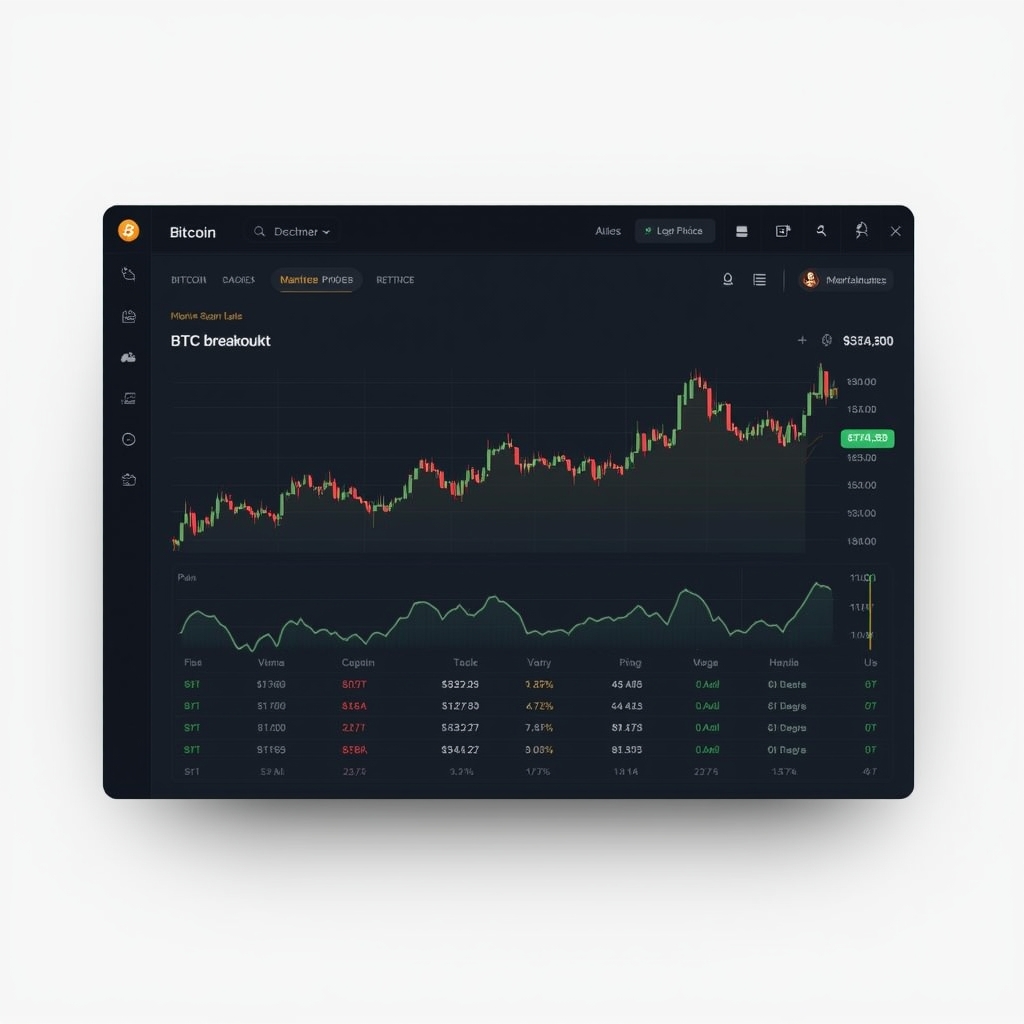
Risk control separates profitable traders from those who blow accounts. For bitcoin breaks, common rules include risking a small percentage of capital per trade (1-2%), using stop-loss orders beyond a natural technical invalidation point, and sizing positions so a stop loss equates to acceptable dollar risk. Volatility-adjusted sizing (ATR-based stops) is particularly valuable for BTC because its swings vary substantially.
Also consider correlation risk — crypto markets often move together. A well-sized position in a singular trade can still expose your portfolio to unexpected systemic moves. Maintain a clear exit plan: define both stop-loss and profit targets, and know what market signals will cause you to reassess the trade.
Historical examples of meaningful bitcoin breaks
Learning from history helps identify repeatable patterns. Notable BTC breaks include the 2017 breakout above $4,000 that launched the parabolic run, and the March 2020 breakdown during the COVID crash that reclaimed momentum after a sharp V-shaped recovery. Each case shows different mechanics: 2017 was driven by demand and FOMO, while 2020 involved liquidity shocks and rapid capitulation followed by institutional buying.
Study chart sequences: where did volume expand, did price retest the breakout level, and how long did the follow-through last? Those details teach you which breaks led to sustained trends and which were short-lived.
Tools, resources, and a practical trading checklist
Equip yourself with reliable charting and news tools. Recommended resources: TradingView for visualization and multi-timeframe analysis, CoinMarketCap/CoinGecko for market data, on-chain analytics (Glassnode, CryptoQuant) for flow insights, and real-time news aggregators for fundamental catalysts. Combine these with exchange-level order book monitoring if you trade intraday.
Practical bitcoin breaks checklist (use before entering):
- Identify the exact level being tested (resistance/support, trendline)
- Confirm higher timeframe alignment (daily/4H)
- Check volume: breakout candle should ideally show expansion
- Look for retest opportunity or set a conservative stop
- Validate with an indicator (MA, RSI, OBV)
- Assess news: any catalysts that could invalidate the break?
- Size position according to ATR-based stop and portfolio risk
By applying this checklist, traders can approach bitcoin breaks with discipline, avoiding impulsive entries and improving long-term outcomes. Keep a trade journal to log setups and outcomes; over time you’ll refine which types of bitcoin breaks suit your style and horizon.
FAQ
What is a Bitcoin break or Bitcoin breakout?
A Bitcoin break, often called a breakout, occurs when Bitcoin's price moves decisively above a resistance level or below a support level on the chart, usually accompanied by increased volume and momentum, signaling a potential trend continuation or reversal.
What causes Bitcoin breaks?
Breaks are caused by a mix of factors: technical triggers (price hitting key levels), shifts in market sentiment, large buy/sell orders from whales or institutions, macroeconomic news, regulatory announcements, on-chain events like large transfers, and liquidity imbalances.
How do you distinguish a true breakout from a fakeout?
Confirm a breakout with increased trading volume, follow-through price action after the initial move, retest of the broken level as support/resistance, and supporting indicators (RSI, MACD, on-chain flows); fakeouts typically lack follow-through and quickly reverse.
Which technical indicators help identify Bitcoin breakouts?
Common indicators include support and resistance zones, trendlines, moving averages (50, 100, 200), volume, RSI for momentum, MACD for trend confirmation, and volatility measures like ATR to size targets and stops.
How important is volume when analyzing a Bitcoin break?
Volume is crucial: a breakout on high volume suggests strong conviction and higher probability of continuation, while low-volume breaks often indicate weak participation and higher risk of reversal.
Can on-chain metrics signal an imminent Bitcoin break?
Yes. On-chain metrics like net flows to exchanges, whale transfer activity, realized profit/loss, active addresses, and MVRV can indicate supply-demand shifts that precede significant price breaks.
How do macro news events influence Bitcoin breaks?
Macro events—interest rate changes, inflation data, geopolitical shocks, or major regulatory rulings—can trigger abrupt liquidity shifts and sentiment swings that produce sharp Bitcoin breaks, sometimes overriding technical signals.
Are Bitcoin breaks more volatile than traditional asset breakouts?
Generally yes: Bitcoin tends to exhibit higher volatility and faster moves than many traditional assets, so breakouts can be sharper and more prone to sudden reversals; position sizing and risk management must reflect that.
How should traders manage risk when trading Bitcoin breakouts?
Use defined stop-loss levels, size positions relative to account risk tolerance, set realistic profit targets or trailing stops, avoid over-leveraging, and consider scaling in/out to manage exposure during volatile breaks.
How do support and resistance levels form for Bitcoin?
They form from prior price action where buyers or sellers repeatedly entered the market—horizontal price clusters, previous swing highs/lows, and psychological round numbers become zones where breaks and retests occur.
How long do Bitcoin break trends typically last?
There’s no uniform duration—some breakouts evolve into multi-month trends (bull runs or bear markets), while others last minutes or days. Duration depends on underlying fundamentals, liquidity, and market participation.
Can institutions cause or amplify Bitcoin breaks?
Yes. Large institutional orders, custody inflows, ETF approvals or redemptions, and hedge fund strategies can create significant liquidity shifts that trigger and amplify breaks.
Are breakouts tradable on longer timeframes as well as intraday?
Breakouts can be traded across timeframes; longer timeframes (daily/weekly) often yield higher probability and clearer context, while intraday breakouts require faster execution and stricter risk controls due to noise.
What role does leverage play in Bitcoin breaks?
Leverage amplifies price moves and margin liquidations can accelerate breaks, causing cascading buying or selling. High leverage environments increase the severity and speed of breakouts and reversals.
How do you set targets for a Bitcoin breakout move?
Common methods include measuring the height of the pattern (e.g., range or triangle) and projecting it from the breakout point, using Fibonacci extensions, or targeting nearby resistance/support clusters; always align targets with risk tolerance.
How does market liquidity affect Bitcoin breaks?
Low liquidity makes breaks more erratic and prone to sharp spikes; high liquidity tends to produce smoother, more sustainable moves. Liquidity dries up around off-hours and during extreme fear/greed events.
What is a consolidation before a Bitcoin breakout?
Consolidation is a price range where buying and selling balance, often forming patterns like triangles, rectangles, or flags; consolidations compress volatility and often precede significant breakouts when the balance shifts.
How do halving events relate to Bitcoin breaks?
Halvings reduce miner rewards and historically coincide with long-term bullish cycles due to reduced issuance; near-term breaks can occur as markets price in supply changes, but halvings are one of several drivers and not an automatic trigger.
Can automated trading bots trade Bitcoin breaks effectively?
Yes, bots can execute breakout strategies consistently and faster than humans, but they need robust rules, risk filters for fakeouts, and adaptive parameters to account for changing volatility and market regimes.
What signs indicate a break is losing momentum?
Declining volume on follow-through candles, divergence on momentum indicators (RSI/MACD), quick re-entry below/above the broken level, and rising selling/buying pressure on order books all suggest weakening momentum.
How do news-driven breaks differ from technically driven ones?
News-driven breaks are sudden and often volume-heavy, prompted by external events; technically driven breaks evolve from chart patterns with clearer support/resistance dynamics and may have more orderly retests and confirmations.
How do Bitcoin breaks compare to stock market breakouts?
Bitcoin breakouts are typically more volatile, occur 24/7 (no market close), and react faster to global crypto-specific events; stock breakouts may be driven more by company fundamentals and have regulated trading halts that limit extremes.
How do Bitcoin breaks compare to gold price breakouts?
Both are influenced by macro factors and store-of-value narratives, but Bitcoin breaks are generally more volatile and sentiment-driven, while gold moves can be steadier and tied to central bank policies and physical demand.
How do Bitcoin breaks compare to Ethereum breakouts?
Ethereum breakouts often reflect smart contract activity, DeFi growth, and network upgrades, while Bitcoin breaks are more tied to macro adoption, on-chain metrics, and scarcity narratives; ETH can correlate with altcoin cycles more than BTC does.
How do Bitcoin breaks compare to altcoin breakouts?
Altcoins typically show higher volatility and lower liquidity, so breakouts can be more extreme but less reliable; Bitcoin often leads market direction, with many altcoin breaks following Bitcoin’s trend or decoupling during strong alt seasons.
How do Bitcoin breaks compare to forex market breakouts?
Forex breakouts are influenced by macroeconomic differentials and central bank actions and operate in highly liquid pairs; Bitcoin breakouts are driven by crypto-native flows, 24/7 trading, and speculative investor behavior, leading to different risk profiles.
How do breaks caused by regulatory news differ from those caused by technological forks?
Regulatory-news breaks are sentiment-driven with immediate market-wide reactions and potential long-term policy implications; tech forks or protocol changes are more technical events that can split supply or change utility, causing different market responses.
How do ETF approvals or listings affect Bitcoin breakouts compared with exchange-level events?
ETF approvals can introduce sustained institutional demand and catalytic, often lasting, breakouts; exchange-level events (outages, delistings) tend to cause short-term liquidity shocks and volatility that may reverse quickly once resolved.
How should long-term investors interpret short-term Bitcoin breaks compared to traders?
Long-term investors see short-term breaks as noise within a broader thesis (adoption, scarcity) and may use dips to accumulate, while traders treat breaks as tactical entries/exits with strict risk controls and time-based strategies.